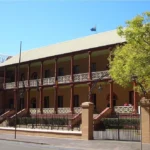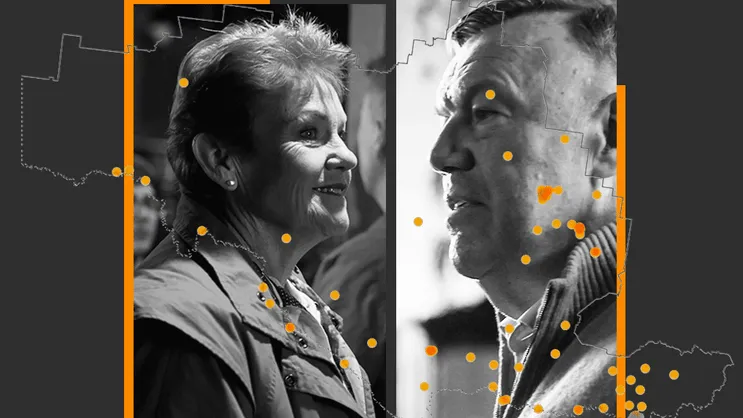
The Blighty Pub stands out in a remote area, with its name painted in large letters on the roof for pilots to spot. Blighty lacks a town center, featuring mostly irrigation canals and farmland. A pub along the highway and a school nearby serve its 190 residents. At Blighty Public School’s polling booth, voters delivered the highest support for Pauline Hanson’s One Nation party during the recent Farrer by-election in south-west NSW.
Of 113 votes cast there, 101 went to One Nation candidate David Farley, capturing about 90 percent. Analysis of polling booth results reveals Farley’s win relied on small farming communities, towns, and villages across the Murray River Valley and southern Riverina. These rural voters propelled One Nation ahead of community independent Michelle Milthorpe, who performed best in Albury, the seat’s largest city.
Neither Coalition party—Liberals nor Nationals, which dominated the seat for 77 years—factored in the top two. This marks the first time in over 50 years that major parties missed the runoff in an election.
Lesson 1: Voters Reject Coalition in Traditional Strongholds
The clearest signal from the by-election is widespread rejection of the Coalition. Only about one in five Farrer voters backed either the Liberals (12 percent primary vote) or Nationals (10 percent). Nearly 80 percent turned away, indicating frustration with the major parties.
Booths where former Liberal leader Sussan Ley excelled last year swung sharply against the Liberals. In Euston, a Murray River town known for grape growing with around 500 residents, Ley secured 66 percent of primaries in 2025. The Liberal candidate this time received just 11 percent—a 55-point drop—while Nationals got 14 percent. One Nation’s vote surged from 7 percent to 49 percent.
Similar shifts occurred elsewhere. In Murray Downs, near a riverside golf resort, Ley’s 63 percent primary fell to single digits (8 percent) for the Liberal, as One Nation jumped from 9 percent to 52 percent. In Coleambally, an irrigation village with declining population, Liberal support plummeted from 62 percent to 7 percent, with One Nation rising from 5 percent to 57 percent.
Lesson 2: Urban-Rural Voting Divide Remains Stark
On Australia’s electoral landscape, capital cities lean Labor while regions hold for Liberals and Nationals. Farrer’s loss strips the Coalition of one regional bastion, but urban-rural splits persist. One Nation dominated rural booths like Blighty, while Milthorpe, backed by Climate 200, led urban stations.
This pattern shone in Albury, a 60,000-resident city more akin to Sydney or Melbourne. Last year, Milthorpe topped every Albury booth against Ley. Analysis of 32,000 votes across 14 Albury booths shows her at 41 percent primary, One Nation at 34 percent, Liberals at 16 percent, and Nationals at 8 percent. On two-candidate preferred, Milthorpe edged Farley 52.3 percent to 47.7 percent.
Outside Albury, Milthorpe won only Griffith North (52.7-47.3) and Griffith West (51-49), coming closest in other Griffith booths, Narrandera, and Leeton with over 45 percent. One Nation led everywhere else.
Lesson 3: One Nation Gains Ground Across Urban and Rural Areas
One Nation advanced even in Albury, signaling risks for Labor in cities. Albury mirrors capitals with higher incomes and education near the center. In outer Springdale Heights, where 10 percent hold bachelor’s degrees and median weekly income sits at $1200, Milthorpe won narrowly last year (57.7-42.3) and barely held it (50.8-49.2) against Farley.
Closer to central Albury and East Albury, where incomes rise $300 weekly and a third have degrees—above NSW average—Milthorpe’s two-candidate preferred margin exceeded 60-40 over Farley. These patterns suggest One Nation targets outer suburbs resembling these areas, such as Labor seats Hawke, Bruce, Holt in Melbourne, or Werriwa and Macarthur in Sydney. Coalition seats like Lindsay and Longman face similar threats.